
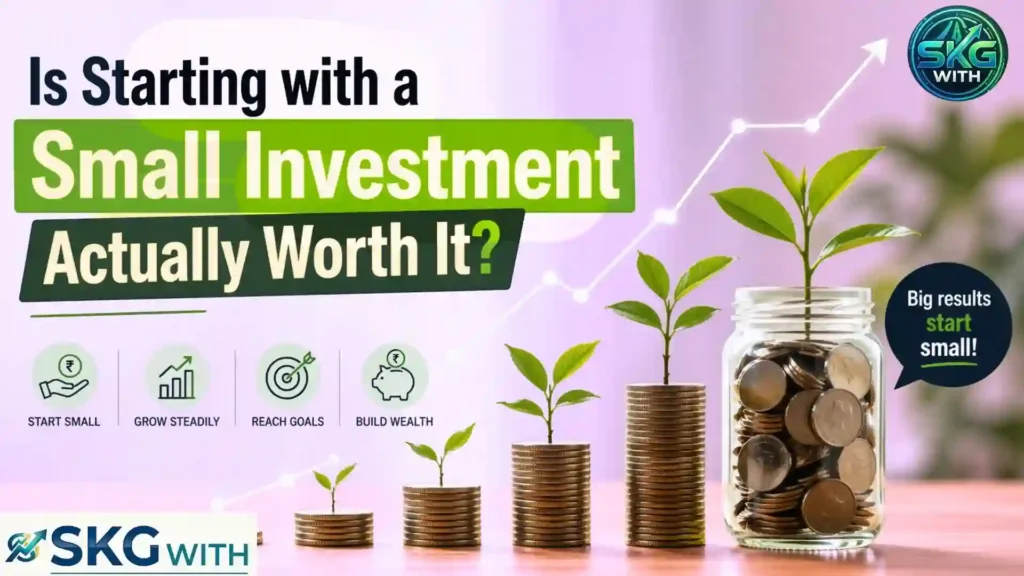
In today’s world—where stories of financial success often emphasize massive capital and large-scale ventures—it is easy to assume that investing is only worthwhile if you start on a grand scale. However, the reality is quite different.
Understanding Small Investments
Generally speaking, “small investment” refers to allocating a modest sum—whether into mutual funds or a small-scale business venture. However, what constitutes a “small” amount depends entirely on an individual’s specific circumstances; for many newcomers, this could range anywhere from a few hundred to a few thousand rupees. The underlying philosophy behind starting on a small scale is simple: you can begin right now—and move forward—using whatever capital you currently have at your disposal.
Why People Hesitate to Start Small?
Before discussing the benefits of this, it is essential to understand why so many people are afraid to start investing with small amounts.
- Perceived low returns: People assume small investments won’t generate meaningful profits.
- Fear of risk: Even a small loss can feel significant when funds are limited
- Comparison with others: Seeing others invest large sums can be discouraging
- Lack of financial knowledge: Beginners often don’t know where or how to start.
I have my concerns, but it often feels like this underestimates the long-term potential of investing.
The Power of Starting Small
1. Builds Financial Discipline
One of the biggest advantages of starting small is that it helps you develop consistent financial habits. Investing regularly, even in small amounts, creates discipline. Over time, this habit becomes second nature and sets the foundation for long-term wealth creation.
2. Reduces Risk Exposure
When you invest a smaller amount, your financial risk is limited. This is particularly beneficial for beginners who are still learning how markets work. Mistakes made early with smaller sums are less damaging and often become valuable lessons.
3. Encourages Learning by Doing
Reading about investing is helpful, but practical experience is far more effective. Starting with a small investment allows you to understand market movements, investment tools, and strategies in real time without overwhelming pressure.
4. Takes Advantage of Compounding
Even small investments can grow significantly over time due to the power of compounding. When your returns start generating their own returns, your money begins to grow exponentially. The earlier you start, the more time compounding has to work in your favor.
5. Accessible to Everyone
Small investments remove the barrier to entry. You don’t need a large income or savings to begin. This accessibility makes investing possible for students, young professionals, and individuals from all financial backgrounds.
Common Investment Options for Small Budgets
If you are starting with limited capital, here are some popular options to consider:
1. Mutual Funds (SIP)
Systematic Investment Plans (SIPs) allow you to invest a fixed amount regularly, often starting as low as a few hundred rupees per month. This method promotes consistency and reduces the impact of market volatility.
2. Stocks
Investing in individual stocks with small amounts can help you learn how the stock market works. While riskier than mutual funds, stocks offer the potential for higher returns.
3. Fixed Deposits and Recurring Deposits
These are safer investment options with predictable returns. Though the returns may be lower, they provide stability and are ideal for risk-averse investors.
4. Digital Gold or ETFs
Small investments in gold or exchange-traded funds (ETFs) offer diversification and can act as a hedge against inflation.
Challenges of Small Investments
While starting small has many benefits, it is important to acknowledge its limitations:
1. Slower Growth
Small investments naturally take longer to grow into substantial wealth. Patience is essential.
2. Limited Diversification
With less capital, it may be harder to spread your investments across multiple assets, increasing concentration risk.
3. Emotional Impatience
Many investors expect quick results. When returns are slow, they may lose motivation and stop investing altogether.
4. Transaction Costs
In some cases, fees and charges can eat into small investments, reducing overall returns. Choosing low-cost platforms is crucial.
Strategies to Maximize Small Investments
To make the most of a small investment, consider the following strategies:
1. Be Consistent
Regular investing matters more than the amount. Even small, consistent contributions can lead to significant growth over time.
2. Reinvest Earnings
Avoid withdrawing profits early. Reinvesting helps compound your returns and accelerates growth.
3. Increase Contributions Gradually
As your income grows, increase your investment amount. This step-up approach can significantly boost long-term returns.
4. Diversify Wisely
Even with limited funds, try to invest in different asset classes to reduce risk.
5. Stay Patient
Wealth creation is a long-term process. Avoid chasing quick profits or reacting emotionally to market fluctuations.
Who Should Start Small?
Starting with a small investment is ideal for:
- Beginners who are new to investing
- Students and young professionals
- Individuals with limited savings
- Anyone looking to build financial habits
In fact, starting small is often better than waiting until you have a large sum, as time plays a crucial role in wealth creation.
Disclaimer :- I am not a financial advisor; please conduct thorough research before investing. This content is for educational purposes only.
Common Myths About Small Investments
Myth 1: Small Investments Don’t Matter
Reality: Every large portfolio starts with small contributions.
Myth 2: You Need a Lot of Money to Invest
Reality: Many investment platforms allow you to start with minimal amounts.
Myth 3: Investing Small Is a Waste of Time
Reality: The experience and discipline gained are just as valuable as returns.
Conclusion
Starting with a small investment is not only worthwhile—it is often the smartest way to begin your financial journey. It lowers risk, builds discipline, and allows you to learn without significant pressure. While the returns may seem modest at first, the long-term benefits of consistency, compounding, and experience can be substantial.
Rather than waiting for the perfect moment or a large sum of money, the better approach is to start now with what you have. Over time, small steps can lead to significant financial progress.